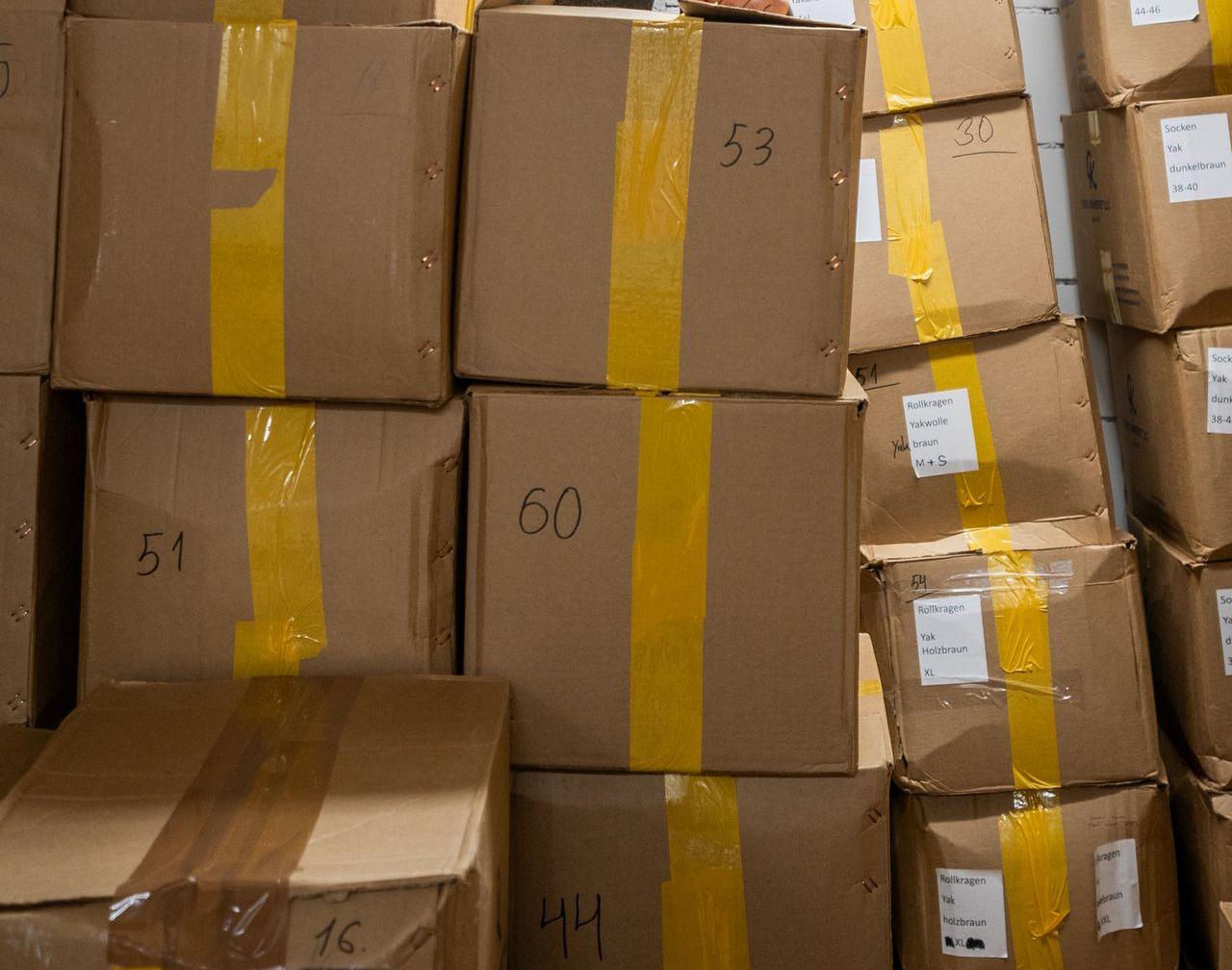
The details of production
It takes many steps to turn pure camel wool into a pair of socks.
This is done in one location by our producers in Ulaanbaatar.
Production in Detail
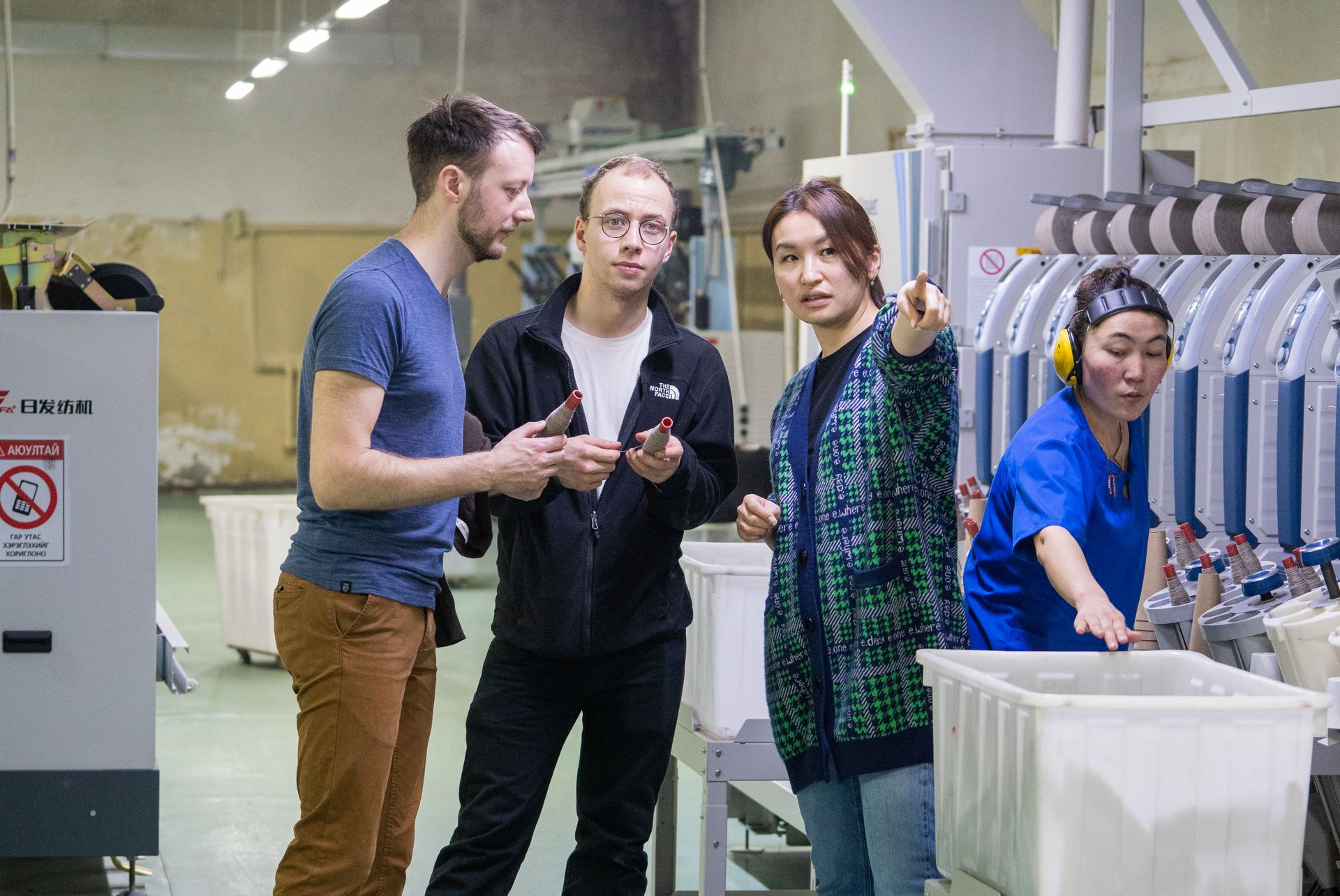
Responsibility in production
The fibers of the raw wool go through a surprising number of production steps so that they can be turned into fine, high-quality wool clothing. All stages of production, from wool extraction to finishing the final garment, take place in Mongolia. We therefore avoid long transportation routes while the entire added value remains in the country.
The family businesses that make our socks and garments take care of every step of production themselves. This means we can show you exactly how the wool is processed in detail.
Responsibility in production
For us at steppenstrolch, fairness and sustainability are our top priorities - and that extends to our production as well. For years, we have relied on family-owned businesses in Ulaanbaatar to manufacture our clothing. We visit the manufacturers regularly on-site and work with them as equals on design and pricing issues.
Every stage of production - from wool harvesting to the completion of the final garment - takes place in Mongolia. As a result, the entire value chain remains within the country.
A look behind the scenes of textile production
The wool goes through several processing stages before it can be turned into a garment. The manufacturing phase is divided into two sub-processes – Yarn preparation and production of the garment. Here we show you in detail how the production process of our clothing works.
1. Yarn preparation
Sorting
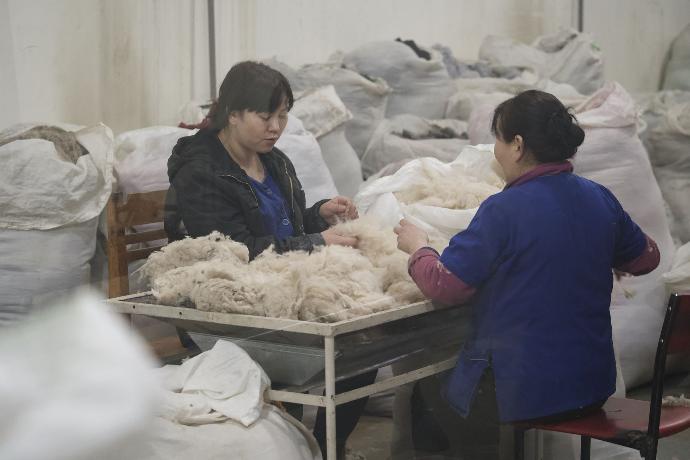
First, the raw wool is brought to the capital from the provinces of Mongolia. The wool from camels, sheep and yaks is sorted by color in Ulaanbaatar.
Washing
The raw wool is then cleaned of dirt and vegetable substances such as grease and sulphur.
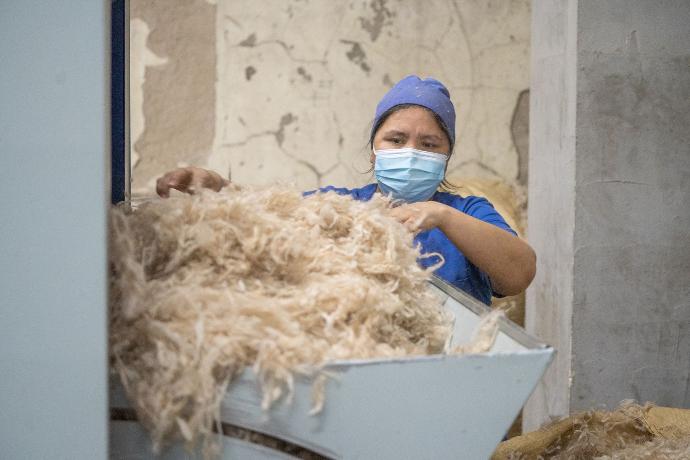
Dehairing
The next step separates the coarse hair from the valuable downy hair. The fine hairs are used for textile production and the coarse hairs are utilised as a by-product.
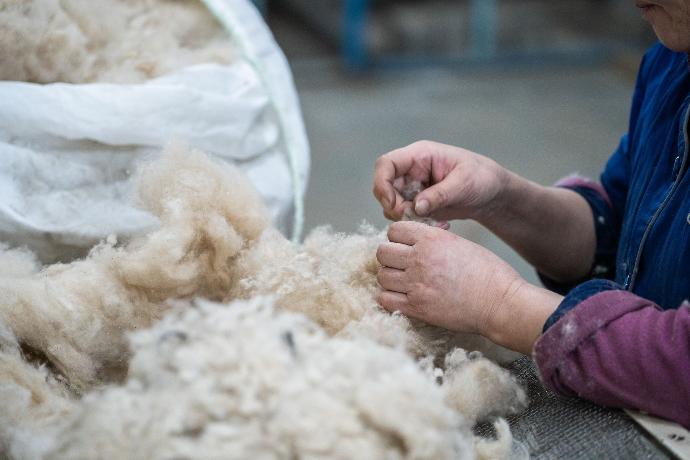
Fleece production
A wool fleece is then made from the wool fibers. In the case of sheep's wool socks, the fleece is also bleached and dyed.
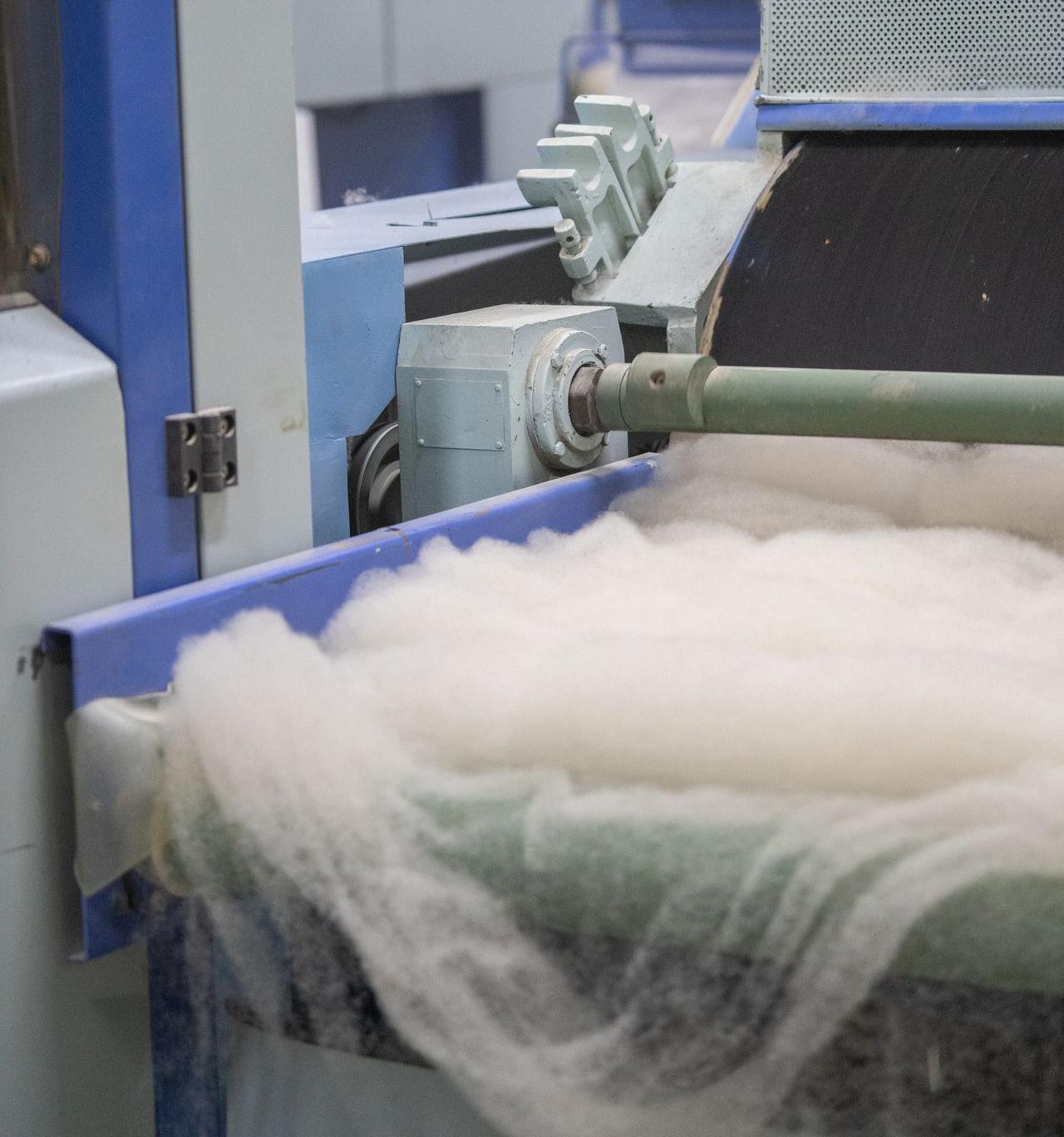
Spinning
The yarn is then spun from the fleece. During the spinning process, other types of yarn such as polyester, elastane or viscose can be added. This happens, for example, with our socks, which are a blend of fibers in the end product.
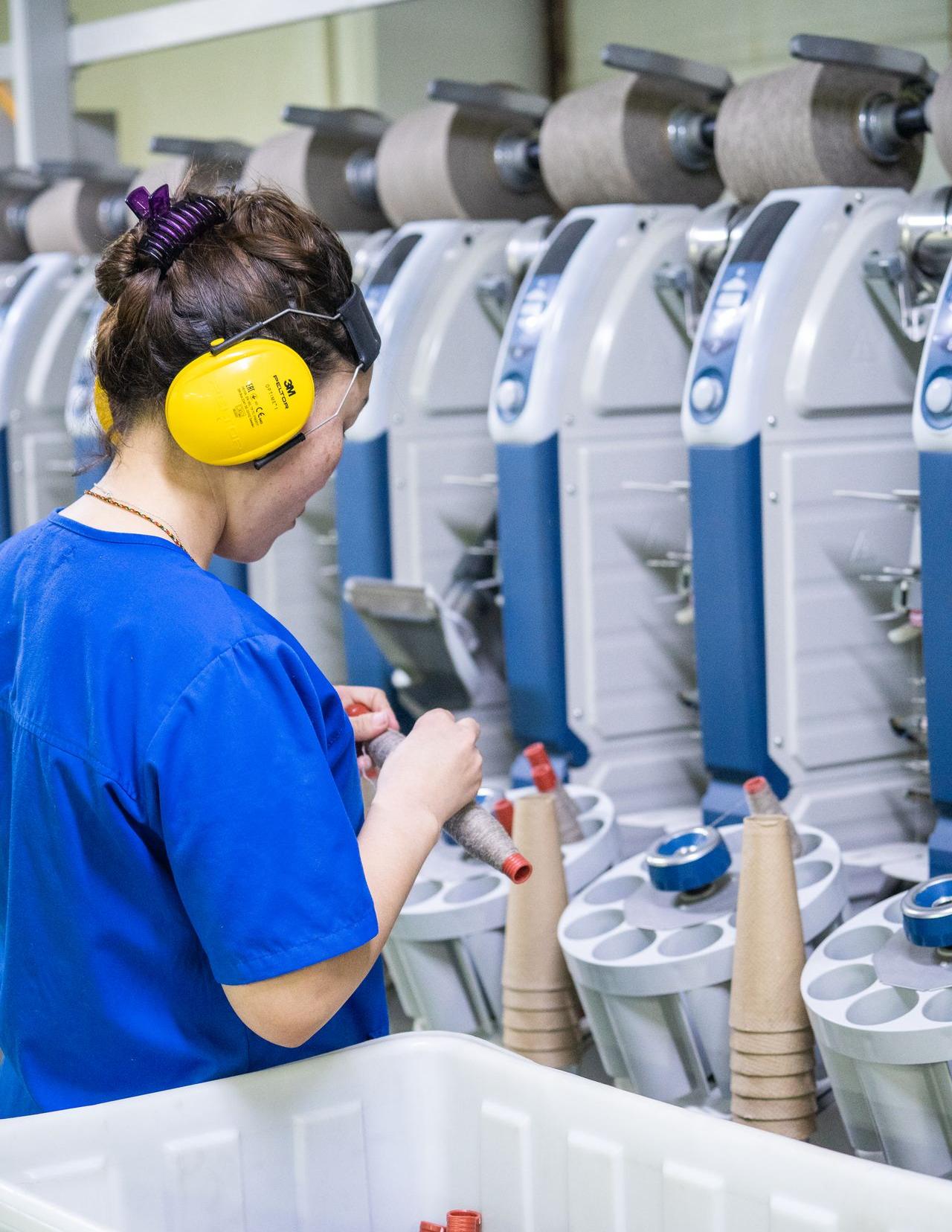
2. Production of garments
Knitting
The subsequent manufacturing process depends on the type of product. In the production of socks, for example, yarn is typically knitted into a fabric or cloth. Circular knitting machines process the supplied yarn according to a predetermined program.
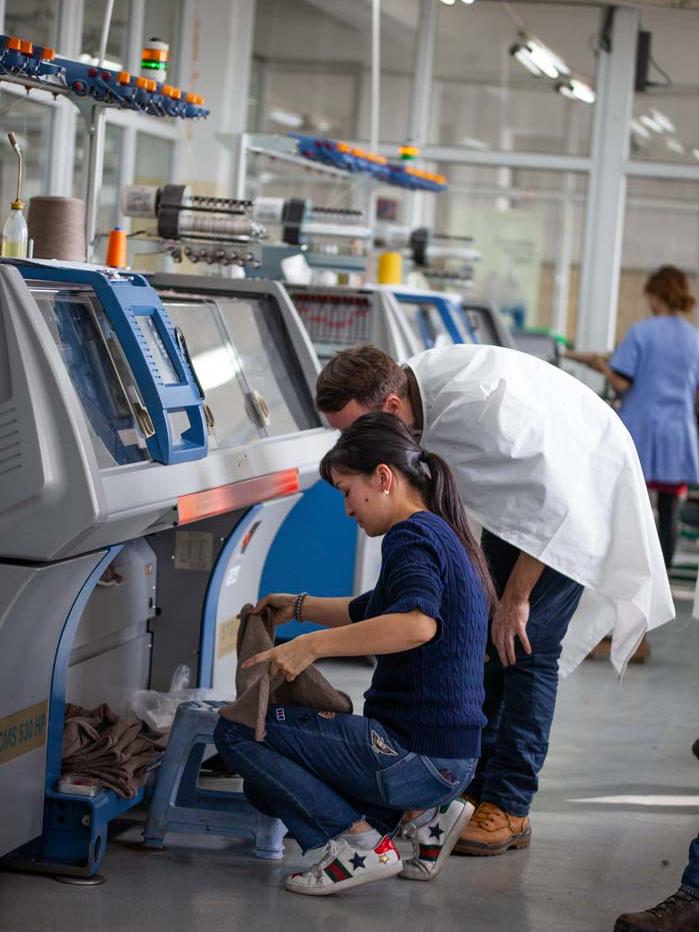
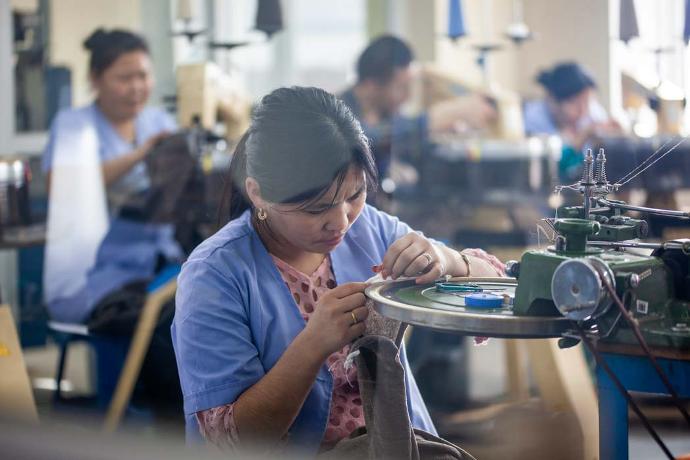
Sewing and linking
The knitted yarn can be linked and sewn together to form a garment by machine or by hand. For garments such as sweaters, human hands are usually added to create the final garment.
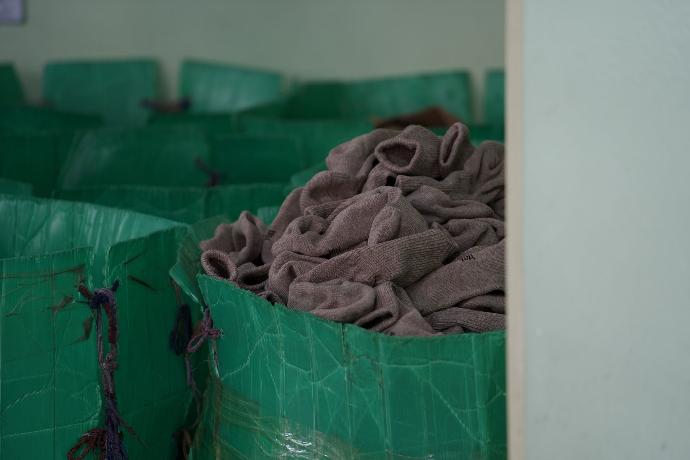
Washing
The garment is then washed again.
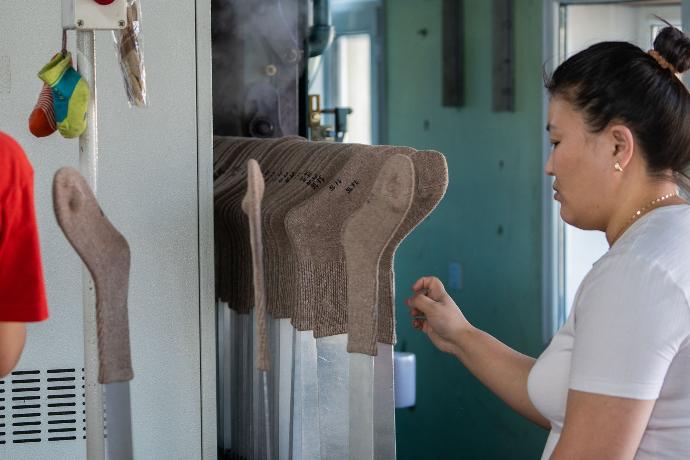
Ironing
In the production of socks, for example, the desired size is set using a hot metal foot frame and hot steam prevents creases on the surface. Our producers work in a cluster with other companies in Ulaanbaatar. The socks are finished in a factory in the north of the city.
Done!
After production and quality inspection, the textiles are packed and dispatched. They make their way to Aachen and are checked again by us. This turns the raw wool into a piece of clothing that you can buy in our Shop .